
Our Record
Decades of Experience.
Specialized Focus.
The managing directors of Alexander Price & Co. have advised physician owners and healthcare founders through transactions spanning every major specialty, buyer type, and deal structure.
$10M — $500M
TRANSACTION SIZE RANGE
24
Unique Specialties Represented
100%
Sell-Side Representation
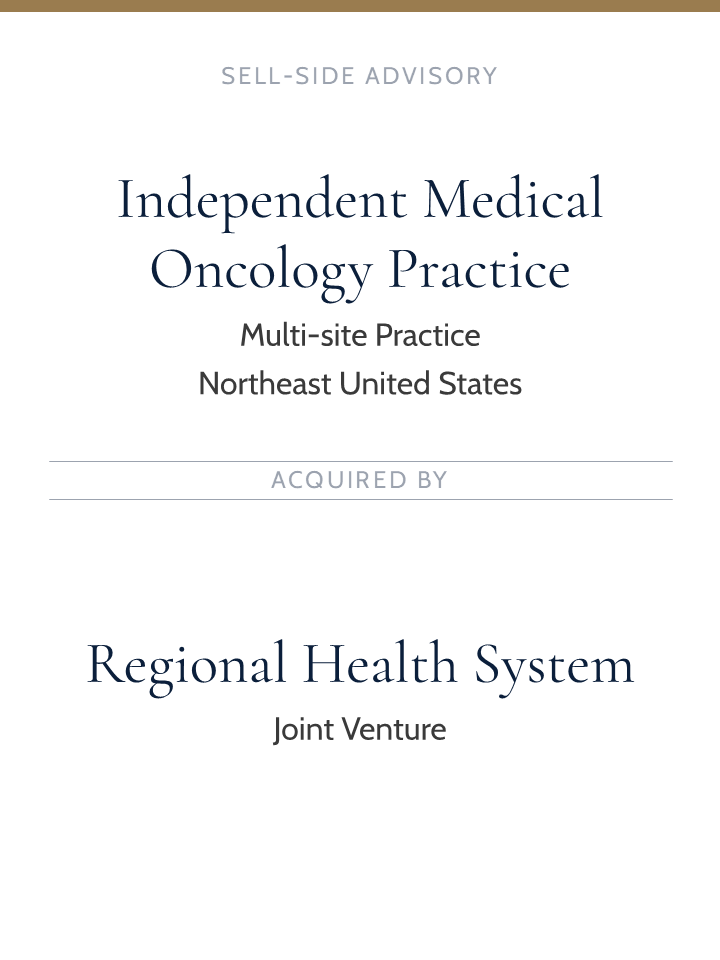
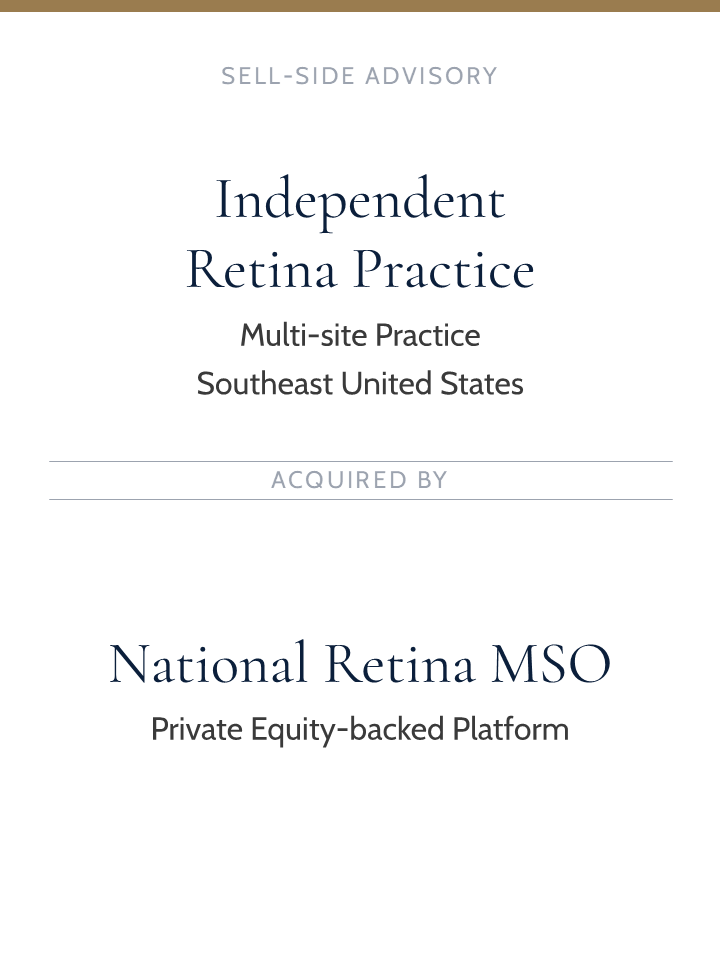
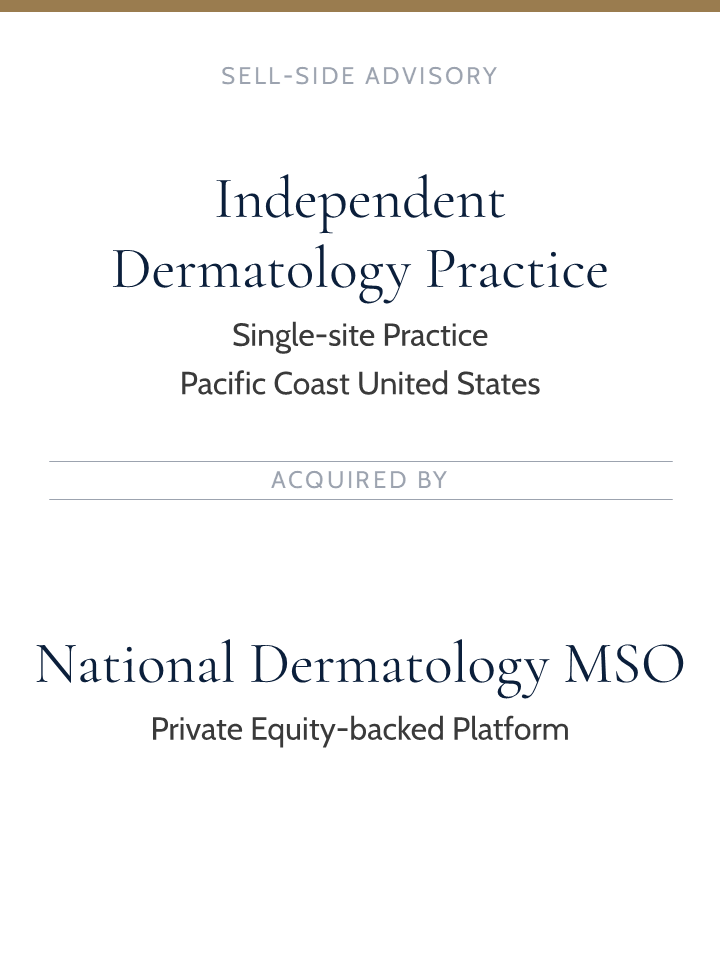
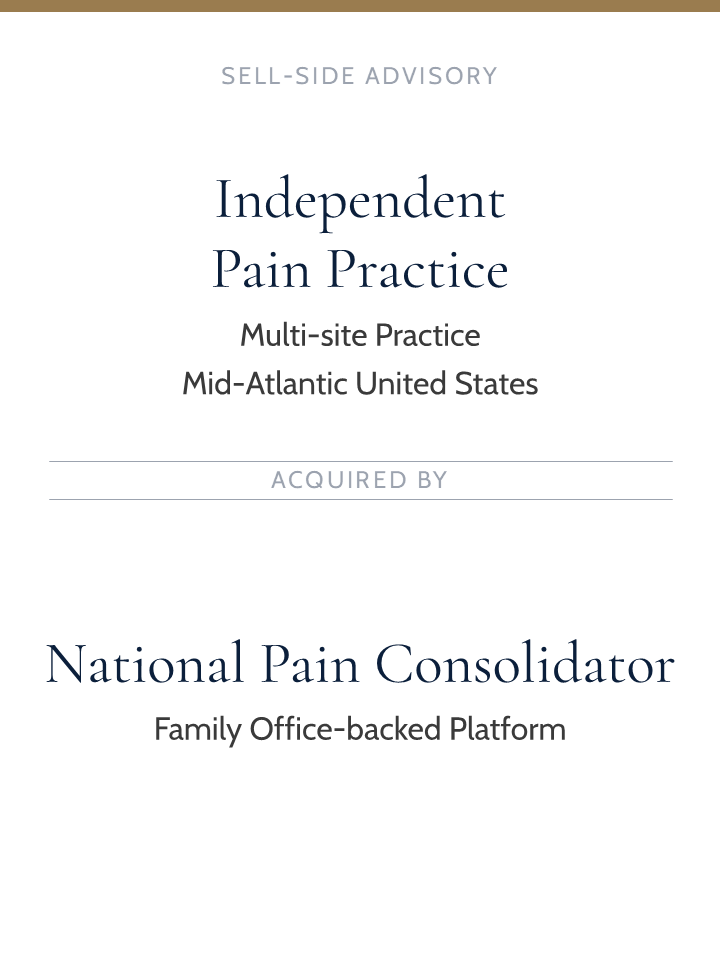
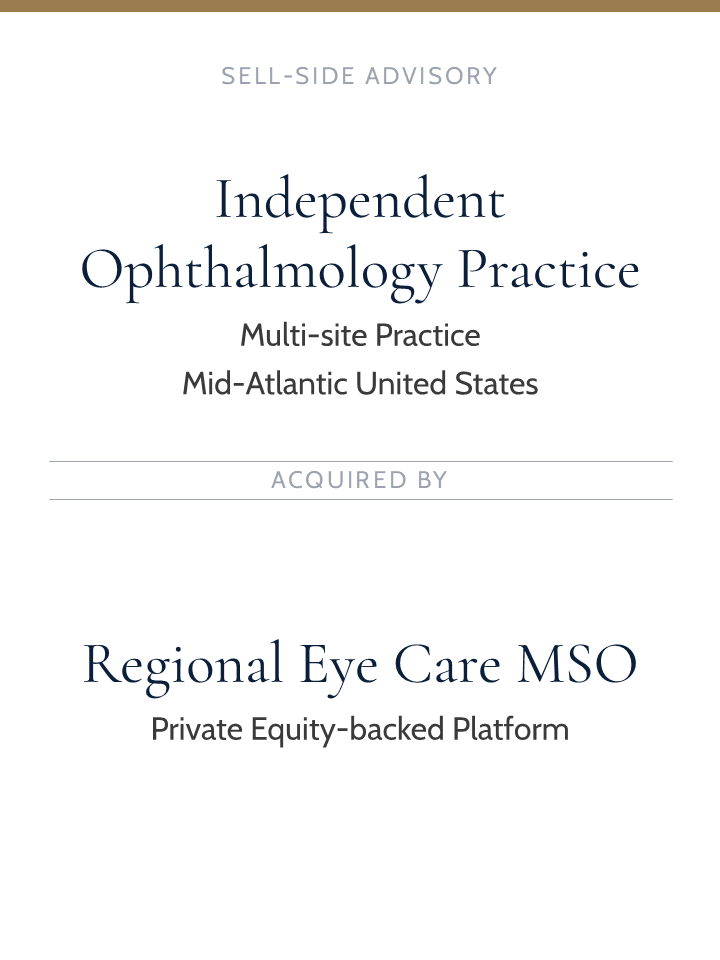
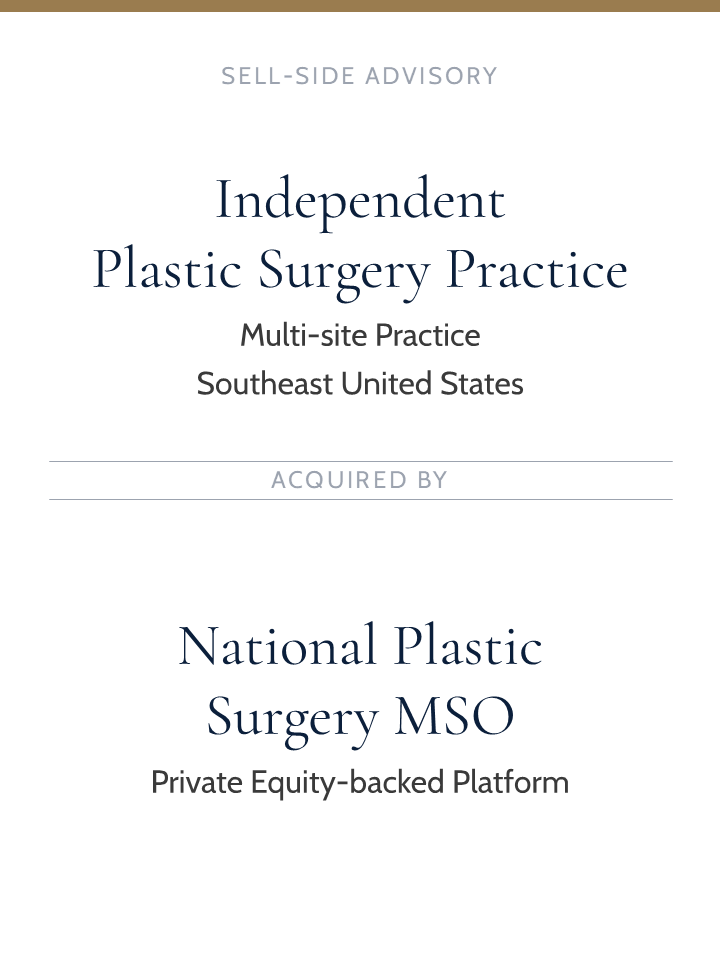
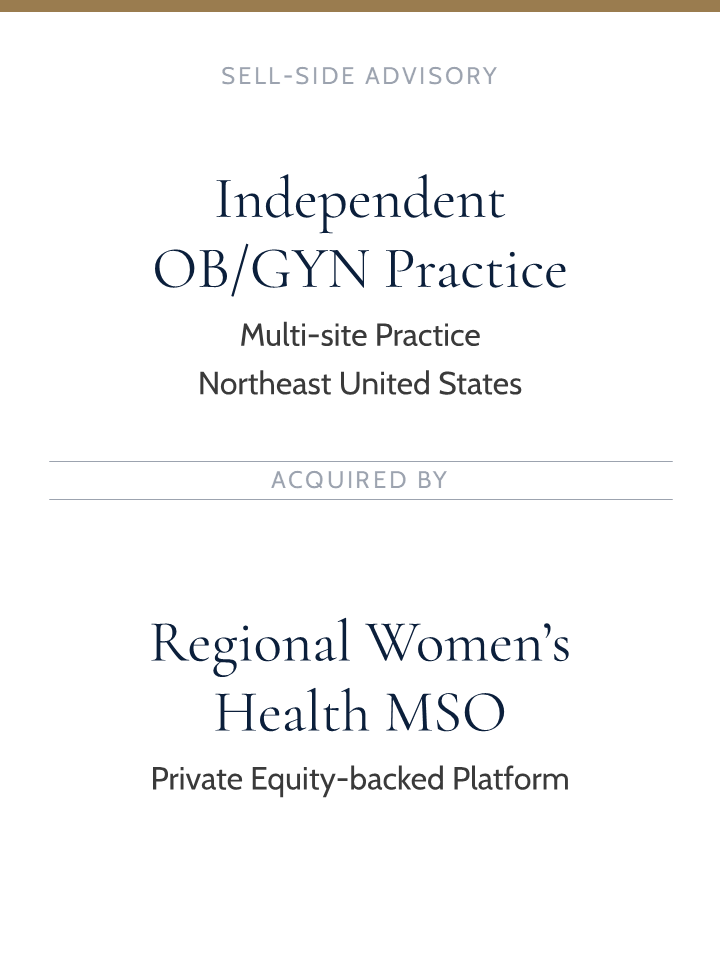
Selected Transactions
Reflects experience from prior firms prior to founding Alexander Price & Co.

Specialty Depth
We Know Your Market
Acquirer appetites, valuation benchmarks, and deal structures differ meaningfully across specialties. Our experience reflects that complexity.
Allergy & ENT
Growing PE Activity
Allergy and otolaryngology practices have seen meaningful private equity consolidation activity over the past several years, with acquirers drawn to the specialty’s combination of high office visit volume, in-office procedural revenue, and ancillary opportunities — including allergy testing, immunotherapy administration, and hearing services. ENT practices with audiology programs or significant sinus surgery volume tend to generate more competitive sale processes than those whose revenue is concentrated in evaluation and management. The specialty remains relatively fragmented, with many single- and small-group practices still operating independently, which works in a prepared seller’s favor: physician owners who run a structured, competitive process are often able to create meaningful tension among acquirers and achieve favorable economics and deal terms. Early preparation — particularly around financial documentation and practice positioning — is consistently among the most important determinants of outcome.
Cardiology
Health System & PE
Cardiology is among the most strategically consequential specialties in health system M&A. Health systems have demonstrated a consistent willingness to pay a significant premium to secure or protect cardiology referral relationships and procedural volume — particularly in competitive markets where cardiovascular service lines are central to hospital economics. Private equity has been more selective, generally favoring independent practices with high-acuity procedural subspecialties — interventional cardiology, electrophysiology, structural heart — that generate strong revenue per physician with limited dependence on hospital facilities. The breadth of the specialty means that acquirer fit varies considerably by subspecialty mix, group structure, and market geography. Physician owners benefit from advisors who understand how to segment the buyer universe by clinical profile rather than simply running a broad process, and who can navigate the complexity of physician employment agreements that frequently accompany health system transactions.
Dermatology
High PE Activity
Dermatology was among the first physician specialties to experience large-scale private equity consolidation, and the market has matured into one of the most competitive and well-capitalized in healthcare M&A. Practices that combine medical, surgical, and cosmetic service lines — particularly those with Mohs surgery capacity — tend to command premium valuations. Pure cosmetic platforms attract a distinct acquirer set with different return expectations and deal structures than those focused on medical dermatology. Provider tenure, real estate arrangements, the ratio of employed to independent physicians, and the presence of advanced practice providers are among the structural variables that most meaningfully affect both valuation and deal terms. Because the market has matured, physician owners benefit significantly from advisors who understand current platform strategies and can identify which acquirers are most likely to compete aggressively for a specific practice’s profile.
Home Care & Hospice
High Activity · Regulatory Complexity
Home care and hospice represent one of the most active segments of healthcare M&A, driven by demographic tailwinds, a sustained shift toward lower-cost care settings, and the strategic importance of post-acute relationships to health systems and managed care organizations managing total cost of care. Hospice in particular has attracted substantial private equity investment over the past decade. However, the sector has also drawn increased regulatory scrutiny — including CMS cap calculations, survey standards, and ongoing audit activity — which means compliance history and documentation quality are among the most consequential factors in any transaction process. Buyers conduct intensive due diligence in this segment, and surprises discovered mid-process are among the most common causes of retrades and deal failures. Owners benefit significantly from advisors with specific experience in hospice and home care compliance, reimbursement mechanics, and the particular dynamics of this acquirer market.
Oncology
Drug Distributors · Health Systems
The community oncology acquisition landscape has shifted considerably in recent years. Large drug distributors — most notably McKesson, through The US Oncology Network, and Cencora, through OneOncology — have emerged as dominant buyers for medical oncology practices, rivaling and in many markets eclipsing health systems as the acquirer of choice. These platforms offer physician owners a compelling combination of preserved clinical independence, access to GPO drug purchasing economics, and the operational infrastructure of a national network — a structurally different value proposition than health system employment. The choice of acquirer in oncology carries significant implications for clinical autonomy, research access, ancillary service retention, and the long-term economics of drug administration revenue. Physician owners evaluating a transaction should approach that choice with the same rigor as the economic terms themselves, rather than defaulting to the most familiar name at the table.
Ophthalmology & Retina
High PE Activity
Ophthalmology has been among the most actively consolidated physician specialties in healthcare M&A, driven by high procedural volumes, favorable reimbursement, and the attractive economics of affiliated ambulatory surgery centers. Retina subspecialty practices command particular attention from private equity acquirers, given the scarcity of fellowship-trained vitreoretinal surgeons and the recurring, medically necessary nature of intravitreal injection revenue — a profile that produces predictable, defensible cash flows well-suited to institutional ownership. The ophthalmology consolidation market has matured considerably, with major platforms now operating at scale across most regions. This means that valuation multiples and deal terms vary significantly depending on the acquirer’s existing geographic footprint and strategic priorities, and that the preparation and positioning work done before going to market has a measurable impact on how competitive a process ultimately becomes.
Orthopedics
All Acquirer Types
Orthopedics presents one of the most complex transaction landscapes in physician practice M&A, with a wider range of potential acquirer types — private equity platforms, health systems, and joint venture partners — than almost any other specialty, each approaching the space with different priorities and deal structures. Ambulatory surgery center ownership is frequently the most valuable asset in an orthopedic transaction, and requires careful structuring to ensure physician owners capture its full value rather than effectively ceding it as part of a broader practice sale. Call coverage obligations, the role of mid-level providers, the mix of surgical subspecialties, and the presence of imaging or physical therapy ancillaries are among the variables that most significantly affect both practice valuation and negotiating dynamics. Orthopedic transactions reward thorough preparation and advisors with specific experience navigating ASC ownership structures and the distinct priorities of each acquirer type.
Pain Management
PE · Compliance-Intensive
Pain management transactions require careful navigation of regulatory and compliance considerations that distinguish this specialty from most others in physician practice M&A. In-office dispensing arrangements, ancillary diagnostic testing, and controlled substance prescribing patterns all receive heightened scrutiny during buyer due diligence — often more intensive than what physician owners anticipate. Private equity interest has been selective, favoring interventional pain practices with clean compliance histories, diversified revenue streams, and limited dependence on opioid management protocols. Quality-of-earnings analysis in pain management transactions tends to be particularly rigorous, and buyers will frequently apply revenue adjustments or valuation discounts for compliance exposures. Physician owners benefit meaningfully from advisors who understand how to structure and position the practice’s clinical profile before going to market, rather than encountering these issues for the first time in due diligence.
Plastic Surgery
PE · Health System
Plastic surgery is one of the few physician specialties with two distinct and largely separate consolidation markets operating in parallel. On the cosmetic side, private equity-backed aesthetics platforms — purpose-built to aggregate cosmetic surgery, medical spa, and non-surgical aesthetic services — have become the dominant acquirer type, and they approach valuation and deal structure very differently than traditional healthcare buyers. On the reconstructive side, health systems and surgical group consolidators are the more natural acquirers, drawn to reconstructive volume, oncologic relationships, and hospital-based procedural revenue.
The distinction matters practically because a practice with a mixed service line will be evaluated differently by each buyer type — and marketing it to the wrong universe produces suboptimal results. The cash-pay nature of cosmetic revenue adds transactional complexity regardless of buyer: it requires careful documentation and typically receives more conservative treatment in quality-of-earnings analyses than insurance-based revenue. Physician owners should be deliberate about which market they are selling into, because the cultural, operational, and economic implications of each path are meaningfully different and difficult to reverse post-close.
Primary Care
Broad Acquirer Interest
Primary care has emerged as a strategic priority for an unusually broad range of acquirers — including traditional health systems, value-based care platforms, payer-affiliated entities, and private equity-backed direct primary care and concierge models — each of which assigns value to primary care relationships in fundamentally different ways. This diversity of buyer interest creates genuine opportunity for physician owners who run a structured, competitive process. It also creates significant complexity: offers from different acquirer types are often not directly comparable on economic terms, because each embeds different assumptions about the value of attributed patient panels, quality performance, and network positioning. Practices with strong quality metrics, existing value-based contracts, or large attributed patient populations are particularly well-positioned in the current market, as buyers increasingly view primary care as the foundation of population health strategy rather than simply a referral source or a complement to specialty care.
Women's Health
Growing PE Interest
Women’s health has attracted growing private equity interest as acquirers have recognized the clinical breadth and patient loyalty characteristics of the specialty — which spans OB/GYN, urogynecology, reproductive endocrinology, maternal-fetal medicine, and, increasingly, menopause and pelvic health. Practices with a strong mix of surgical volume, ancillary services such as ultrasound or infertility treatment, and a stable employed physician base tend to be most attractive to institutional buyers. Ownership transitions in women’s health require particular sensitivity to patient continuity dynamics. Sophisticated buyers increasingly recognize this as a core retention and revenue risk that must be addressed structurally in the deal rather than left to post-close management. Physician owners benefit from advisors who understand both the clinical dynamics of the specialty and the practical mechanics of protecting patient relationships and physician employment through a transaction process.
Additional Specialties
Anesthesia · Behavioral Health · Gastroenterology · Lab & Diagnostics · Neurology · Pediatrics · Podiatry · Rheumatology · Urology · And Others
The specialties profiled on this page represent the areas where our transaction experience is deepest — but physician practice M&A spans a far broader universe, and consolidation is actively reshaping nearly every corner of it. Whether driven by private equity’s search for recurring procedural revenue, health systems’ pursuit of referral relationships and attributed lives, or value-based care platforms building integrated networks, institutional capital has found a rationale for acquiring practices across virtually every clinical discipline.
The fundamental dynamics are consistent regardless of specialty: institutional buyers bring experienced dealmakers, sophisticated diligence processes, and purpose-built deal structures to every transaction. The physician owner — often selling for the first and only time — is negotiating against counterparties who do this every week.
If your specialty is not among those featured, that does not diminish the complexity of the transaction you are contemplating or the preparation it requires. We have advised physician owners across a wide range of specialties and are comfortable applying the same analytical rigor and process discipline to any market where a structured, competitive sale process will produce a better outcome than an unsolicited offer accepted without one.
"A seasoned private equity firm will put its most experienced dealmakers across the table from a physician selling a practice for the first time. We make sure that asymmetry does not determine the outcome."
Alexander Price & Co. — Advisory Philosophy
01 — Preparation
We Build Before We Go to Market
Every engagement begins with a rigorous assessment of the practice’s financial profile, operational strengths, and valuation positioning — before a single acquirer is contacted. The work done in preparation determines the outcome at the table.
02 — Process
Competition Creates Leverage
We run structured, confidential processes that generate multiple credible offers, allowing our clients to negotiate from a position of strength rather than dependency. A single unsolicited offer is rarely the best one.
03 — Alignment
We Represent One Side Only
Alexander Price & Co. does not represent buyers, investors, or health systems. Our undivided attention — and our fee — belong to the physician owners we serve. There are no conflicts of interest here.
Begin the Conversation
Ready to Understand What Your Practice Is Worth?
Confidential. No obligation. We work exclusively with physician owners and healthcare founders.